
Add Row
Add Element
Kozi checks and balances
update

Kozi Checks & Balances
Media Site Home

cropper
update
Add Element
  • Categories
    • Kansas Tax Compliance
    • Audit-Proofing Strategies
    • Bookkeeping Basics
    • QuickBooks Optimization
    • Industry Insights
    • Tax Deduction Deep-Dives
    • Local Business Spotlights
    • Payroll Taxes
    • Business Directory
Add Row
Add Element
cropper
update
 Kozi Checks & Balances TaxTactics News 
cropper
update
December 13.2024
2 Minutes Read

Essential Business Tax Tools: Simplifying the Filing Process for Entrepreneurs

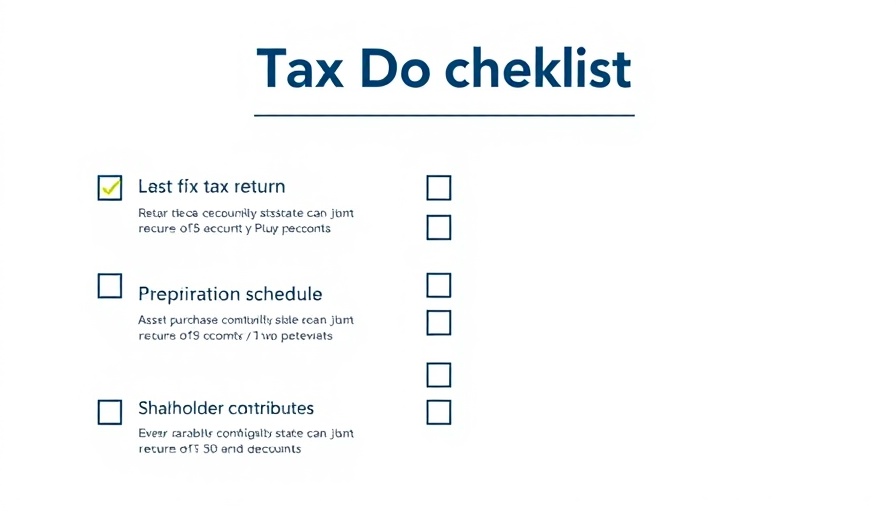
Business tax checklist infographic with essential documents.

Streamlining Your Business Tax Filing: The Essential Checklist

As a small business owner or freelancer, tax season might feel like navigating a maze of paperwork. But fear not, making sure you're prepared with a comprehensive checklist can simplify the process. Entering tax season with confidence starts with knowing exactly what documents and information are required to ensure an error-free filing.

What You’ll Need for a Smooth Tax Process

The key to a stress-free tax season for any entrepreneur lies in being organized. First, gather all business-related income records, such as invoices and bank statements. This ensures that all your revenue is accounted for. Next, it's essential to have a detailed record of your expenses. Items like receipts for office supplies, travel, and utilities can qualify as deductible expenses, potentially reducing your tax burden.

Pay attention to payroll records, if you have employees, as these records are critical for calculating withholding taxes. Don't forget any forms related to business credit and loans. Keeping these documents handy will prepare you for any questions that might arise during the filing.

Unique Benefits of Understanding Your Tax Obligations

Having a thorough understanding of your tax obligations can transform the dreaded chore into a strategic advantage. It allows you to manage cash flow more efficiently, anticipate liabilities, and potentially claim deductions you might otherwise overlook. Moreover, being tax-savvy can shield you from penalties and give you peace of mind.

Informed tax practices don't just mean compliance; they are conduits to business optimization. By effectively managing taxes, you're investing in the robustness of your business's financial health.

Actionable Insights for Effective Tax Management

Remember, proactive tax preparation can make a significant difference. Regularly updating your bookkeeping records throughout the year will ensure you're not overwhelmed when tax season hits. Utilize tax software like QuickBooks to automate this process and reduce manual errors. Additionally, consulting with a tax professional can offer personalized insights tailored to your specific business needs.

Adopting these practices will not only make the filing process less daunting but can enhance your overall business strategy, allowing you to focus more on growth and expansion.

Kansas Tax Compliance

0 Comments

Write A Comment

*
*
Related Posts All Posts
02.10.2026

Why Adjusting My Withholding Changed Everything for My Business

Update Understanding the Importance of Tax Withholding For small business owners, freelancers, and entrepreneurs, managing finances can be challenging, especially when it comes to taxes. Many overlook the significance of adjusting their tax withholding, which can dramatically impact their financial well-being. Withholding refers to the portion of your income that goes directly to the government to cover your tax liabilities. An incorrect withholding amount can result in either losing money each paycheck or facing a hefty tax bill when filing your return. Why You Should Revisit Your Withholding With the Internal Revenue Service (IRS) suggesting that taxpayers review their withholding annually, the impetus to do this is clear. Changes in your personal circumstances, like marriage or a new job, often trigger a need to submit a new Form W-4, the form that outlines your withholding preferences. Moreover, the IRS has made adjustments to the tax code in 2023, altering income tax brackets and standard deductions, which could mean a potential increase in take-home pay for many taxpayers. Inflation, Deductions, and Your Benefits As inflation impacts economic conditions, the IRS has increased tax brackets by about 7% this year. This adjustment allows more earnings to be taxed at lower rates, making it a perfect opportunity for taxpayers to assess their withholding. Additionally, other tax provisions have been revised, yielding greater benefits to those who actively manage their withholding. With proper planning, you can ensure your paycheck reflects your true income and minimizes the risk of owing taxes at year-end. The IRS Tax Withholding Estimator: Your New Best Friend The IRS provides a powerful tool, the Tax Withholding Estimator, which helps taxpayers evaluate if they have the right amount withheld. To utilize this tool effectively, you need to gather your most recent pay statements, income tax returns, and details of any additional sources of income. It's a straightforward way to estimate how your withholding affects your refund or tax payment when filing your return, helping you make informed financial decisions. Making the Necessary Adjustments Once you’ve assessed your tax situation and determined whether to adjust your withholding, submitting a new Form W-4 to your employer is key. Whether you're withholding more due to multiple jobs or fewer due to credits that suit your financial stance, timely action is essential; withholding occurs throughout the year. Any delay in filing can lead to surprises during tax season, ultimately affecting your cash flow. Conclusion: What You Can Do Next The importance of understanding and adjusting your withholding cannot be emphasized enough. For small business owners, freelancers, and entrepreneurs, being proactive in this area can maximize your financial capabilities. If you haven't checked your withholding in a while, now is the time to act. Review your financial situation, utilize the IRS tools available, and make adjustments as necessary to align with the new tax landscape. Stay informed and keep your finances on track this tax season!

02.06.2026

Just Got a 1099-NEC? Here’s How to Handle It Like a Pro

Update Understanding Your 1099-NEC: It’s Not as Scary as It Seems Receiving your first 1099-NEC can be a hair-raising experience for many small business owners and freelancers. As you peer into your inbox, you might feel your heart racing at this unexpected tax document. The good news? This tax form is a normal part of being self-employed, and understanding it can ease the panic that often accompanies it. A 1099-NEC signals that you provided services as an independent contractor, meaning you were not considered an employee. Instead of taxes being withheld from your pay, you are responsible for reporting this income yourself. What the 1099-NEC Means for You Your 1099-NEC essentially states how much you earned over the year as a nonemployee. If you've done freelance work, worked for gig economy apps like DoorDash, or consulted as a small business owner, it is crucial to recognize that this form doesn’t indicate a mistake; it simply represents your income. The impact of receiving a 1099-NEC can feel daunting since you're responsible for understanding how this income affects your taxes. Unlike with a W-2, where your employer handles tax withholdings, with a 1099-NEC, you must keep track of what you owed and the related tax responsibilities yourself. Steps to Take Upon Receiving Your 1099-NEC Feeling overwhelmed? It’s normal. Here’s a simple checklist to help you navigate the responsibilities that come with receiving a 1099-NEC: Gather Your Documents: Collect any related invoices, payout screenshots, and receipts for expenses incurred while providing services. Separate Income from Expenses: Understanding your gross income compared to your actual profit (after expenses are deducted) is key to managing tax implications effectively. Use Tax Software: Leveraging tax software designed for the self-employed can be immensely beneficial, guiding you through necessary deductions and ensuring compliance with IRS requirements. Common Misconceptions Around the 1099-NEC A pervasive myth around the 1099-NEC is that a high amount reported will always lead to a massive tax bill. However, if you have incurred legitimate expenses while earning this income, many of those expenses may be deductible, ultimately reducing your tax burden. The IRS expects to see not only your earnings but relevant expenses that can offset your income. Remember, every business incurs operating costs, and you should take advantage of these deductions. Know What Lies Ahead: Future Tax Prep for Independent Contractors Looking ahead, the IRS is expected to increase the threshold for when a 1099-NEC form must be issued. As reported, starting in 2026, only payments over $2,000 will require this form — allowing for more flexibility for many freelancers. Staying informed and organized will make the tax filing process smoother and less intimidating in the future. Regularly tracking your income and expenses throughout the year will prevent end-of-year panic. As a small business owner or freelancer, navigating the tax landscape can be overwhelming, but the right guidance and tools can demystify the process. By understanding what a 1099-NEC means, how to handle taxes responsibly, and recognizing the value of your expenses, you set yourself up for better financial health in the long run. Getting your 1099-NEC shouldn’t make you feel like you're sinking. Instead, it's an opportunity to learn more about your financial standing, seize control of your taxes, and operate more confidently as a freelancer or business owner.

02.05.2026

Maximize Your 1099-K and Optimize Tax Deductions: Essential Checklist

Update Understanding Your 1099-K: A Key to Successful Tax Preparation For small business owners, freelancers, and entrepreneurs, the arrival of a 1099-K can signal both celebration and trepidation. This form, which reports your total revenue from payment card and third-party network transactions, is essential for accurately determining your year's earnings. However, it’s crucial to remember that alongside this revenue, there are numerous expenses that can significantly reduce your taxable income. Let's dive into a comprehensive checklist to ensure you account for every deductible expense, ultimately maximizing your tax return. The Importance of Tracking Expenses As a self-employed individual or small business owner, meticulously tracking your expenses is vital. According to IRS data, many people overlook substantial deductions, leaving money on the table—potentially between $500 to $3,000 annually. Effective expense tracking not only aids in accurate tax reporting but also promotes better financial management throughout the year. Knowing where your money goes can enhance your budgeting and overall financial health. Checklist for Identifying Deductible Expenses Here's a streamlined checklist to help you find and categorize your business expenses associated with your 1099-K: Home Office Deduction: If you work from home, this includes rent, utilities, and maintenance costs for the home office space. Office Supplies: Keep track of all supplies necessary for your business operations, from paper and ink to office furniture. Communication Costs: Include business-related phone and internet bills as part of your deductions. Travel Expenses: Document any travel for work, including transportation and accommodation costs. Vehicle Use: Assess deductions for car expenses used for business, which could involve mileage or actual expense methods. Professional Services Fees: Include fees paid for legal, accounting, or consulting services. Marketing and Advertising: Any costs related to promoting your business are deductible. Ensuring you keep receipts and proper documentation for each of these categories can simplify the process during tax season and protect you in the event of an audit. Selecting the Right Tools for Proper Tracking Utilizing spreadsheets or specialized expense-tracking software can streamline the management of your finances. While spreadsheets offer a user-friendly, customizable option, tools like Shoeboxed automate many functions, including receipt scanning and organization, which reduces errors and saves you time. Such tools can help you stay organized through cloud access and generate comprehensive reports for your tax forms. Final Thoughts: Don't Leave Money on the Table The overarching lesson is clear: as a small business owner or freelancer, leveraging your 1099-K as a tool to optimize deductions can markedly improve your financial outcome at tax time. By embracing a comprehensive approach to expense tracking, you empower yourself to maintain not only compliance but also financial health and planning for future growth. As you gear up for tax season, consider your options carefully. Whether you choose to go the traditional route with spreadsheets or utilize advanced accounting software, the key is to start early and stay organized. Remember that your diligence now can lead to defensible tax returns and potential savings down the line.

Terms of Service

Privacy Policy

Core Modal Title

Sorry, no results found

You Might Find These Articles Interesting

T
Please Check Your Email
We Will Be Following Up Shortly
*
*
*