
Add Row
Add Element
Kozi checks and balances
update

Kozi Checks & Balances
Media Site Home

cropper
update
Add Element
  • Categories
    • Kansas Tax Compliance
    • Audit-Proofing Strategies
    • Bookkeeping Basics
    • QuickBooks Optimization
    • Industry Insights
    • Tax Deduction Deep-Dives
    • Local Business Spotlights
    • Payroll Taxes
    • Business Directory
Add Row
Add Element
cropper
update
 Kozi Checks & Balances TaxTactics News 
cropper
update
March 11.2025
2 Minutes Read

Capital Gains Tax Rates in Europe 2025: What Investors Need to Know

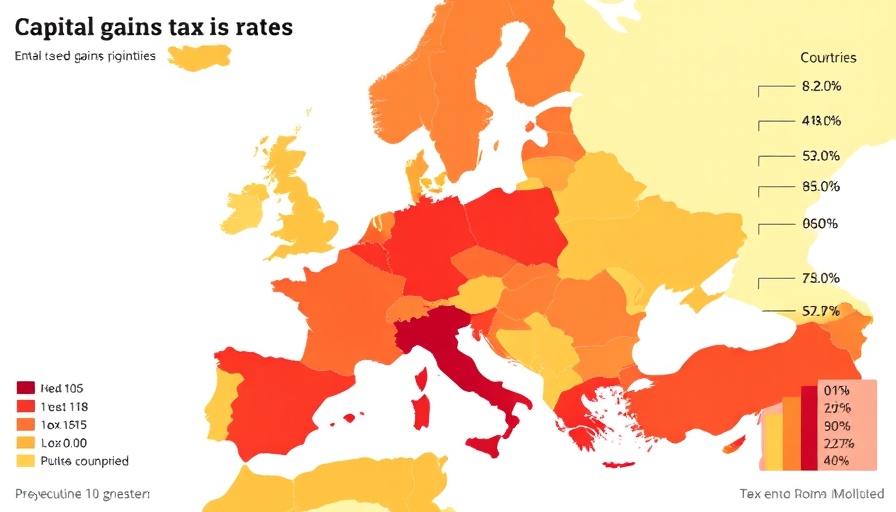
Map showing Capital Gains Tax Rates in Europe 2025, color-coded by rate.

Capital Gains Tax in Europe: Understanding the 2025 Landscape

As investment income, like dividends and capital gains, comes with its own unique tax implications, understanding the capital gains tax rates across Europe is vital for investors. Capital gains tax is charged on the profit made from selling an asset, which can include stocks and real estate. For instance, if an individual spends €100 to buy a stock and sells it for €120, the capital gains tax will apply to the €20 gain, impacting investment decisions significantly.

The Consequences of High Tax Rates

One key takeaway from the tax landscape is that higher capital gains tax rates may discourage saving and investment. This is evident with the realization or lock-in effect, where investors hold onto their assets longer due to the tax implications of selling, ultimately hindering economic growth in various economies. For example, while Austria levies a 27.5% tax, countries like Belgium and Cyprus have intricate exemptions making capital gains non-taxable under certain conditions, promoting a more investment-friendly environment.

Comparing Tax Rates: A Broader Perspective

In considering where to invest within Europe, the differences in capital gains tax rates become crucial. For instance, as of 2025, Bulgaria fosters investment with a mere 10% capital gains tax, while Germany’s rate remains higher at about 26.4%. The interactive map provided by institutions such as the Tax Foundation allows investors to gauge their options effectively, weighing the tax implications in various countries and planning their long-term financial strategies accordingly.

Cultural Implications of Tax Structures

The way countries structure their tax systems is reflective of broader cultural attitudes toward investment and economic growth. For instance, Nordic countries like Denmark and Finland have relatively high capital gains tax rates (up to 42%), but also emphasize social welfare systems funded by these taxes. This contrasts starkly with more laissez-faire economic environments in Eastern European nations like Bulgaria and Estonia that encourage lower tax burdens to attract foreign investments.

Looking Ahead: Future Trends in Taxation

As global economic conditions evolve, so too will the landscape of capital gains taxation in Europe. There are advocacy efforts aiming to harmonize tax rates across the EU, which aim to mitigate discrepancies that could distort investment flows. Watching these developments could be crucial for investors aiming to maximize their investment returns while navigating complex tax environments.

The knowledge of capital gains tax rates is essential as they play a significant role in determining investment strategies. As markets shift, staying informed will lead to better financial decisions. It’s important for investors to explore how the varying rates can impact returns in their preferred investment locales.

Industry Insights

Write A Comment

*
*
Related Posts All Posts
12.07.2025

Discover 5 Must-See Marketing Videos to Inspire Your Business Today

Update Unlocking the Power of Video Marketing for Your Business In today’s digital-first world, the significance of video content cannot be overstated. Videos have emerged as the most engaging way to convey brand stories, connecting emotionally with audiences while enhancing brand visibility. While the evolution of smartphones and social media platforms has made video production significantly more accessible, companies are still navigating how to authentically and effectively leverage this medium. Here are five must-see videos that can inspire and inform your marketing strategy. 1. The Rise of Corporate Videos Corporate videos play a crucial role in reinforcing a company’s message. From onboarding processes to marketing campaigns, they serve various functions that can enhance a brand’s credibility. For instance, consider how Airbnb’s recruitment video showcases diverse personal stories that resonate with potential hosts, emphasizing community and shared experiences. Similarly, HubSpot’s videos humanize their corporate culture, showing that a lively workplace can drive innovation and employee satisfaction. 2. Telling Emotional Stories: The Impact of Human Connection In the realm of marketing, emotional storytelling has been pivotal. Videos such as the renowned Google Earth reunion story highlight how tech can create profound personal connections. The narrative follows Saroo Munshi Khan, who travels back to find his biological family after being separated for decades. This touching story not only showcases Google Earth’s functionality but also encapsulates the brand's essence of bringing people closer together—even across great distances. 3. Memorable Brand Marketing: Lessons from Fun Campaigns Not all effective videos are formal; some can be engagingly comedic. For instance, Hello Flo’s Camp Gyno video creatively tackles menstruation with humor, promoting an open dialogue around a typically taboo subject. This approach resonates especially with younger audiences who appreciate brands that embrace authenticity and relatability. In doing so, Hello Flo sparked a widely appreciated conversation about womanhood, boosting its market presence significantly. 4. Inspirational Journeys: How Brands Create Meaningful Content Videos like Intel’s “Look Inside” film showcase how personal struggles can align with brand messaging. Following Erik Weihenmayer’s journey as the first blind person to summit Mount Everest, it transcends traditional marketing by addressing broader themes of perseverance and resilience. Intel not only promotes its technology but also illustrates its inherent value in supporting each individual's journey. Such inspirational stories can resonate deeply, expanding the brand's narrative beyond concrete products. 5. Strategic Use of Humor and Storytelling Finally, humor can create a memorable brand identity. Dollar Shave Club’s humorous video is famous for quickly establishing its brand while critiquing costly grooming products through a light-hearted lens. The effectiveness of this approach lies in its relatability and entertainment value, reminding businesses that engaging content doesn’t have to be overly serious. As businesses increasingly navigate the impact of digital marketing, embracing video content is essential. From storytelling to humor, the core takeaway is the importance of human connection in marketing efforts. Explore how these narratives can shape your strategies, resonate with your audience, and ultimately propel your brand forward. If you’re looking to refine your video marketing strategy or develop new content ideas, consider incorporating some of the strategies shown in these videos. Remember, every compelling video starts with a unique story. What will yours be?

12.06.2025

Mastering Product Line Management for Business Success

Update Defining Product Lines: A Vital Component of Business Strategy Understanding product lines is essential for any business looking to refine its marketing approach. A product line encompasses a collection of related products, all marketed under a unified brand name, that share similar characteristics and target the same audience. This coherence not only streamlines marketing efforts but also strengthens brand loyalty. The Key Benefits of Product Lines Effective product line management can significantly enhance brand recognition and foster consumer trust, which, in turn, encourages repeat purchases. Companies like Apple and Nike excel in this arena by tailoring their products to meet specific consumer needs while ensuring that they maintain a strong, cohesive brand image. Implementing different types of product lines—such as seasonal and specialty offerings—enables businesses to cater to diverse market demands. This strategic alignment helps optimize pricing strategies and rationalizes stock-keeping units (SKUs) for better inventory management. Analyzing Your Product Line: A Pathway to Growth To effectively manage product lines, businesses must utilize data-driven approaches to analyze sales metrics and customer feedback. This analysis allows for a better understanding of market dynamics and consumer behavior. For instance, seasonal product lines capitalize on specific trends with a high potential for revenue during peak times, while specialty product lines may target niche markets with premium pricing strategies. For instance, with the growing demand for eco-friendly products, businesses may find it beneficial to extend their product lines to include sustainable options, thus appealing to a more environmentally-conscious consumer base. Types of Product Lines: Diversity and Strategy Adept businesses understand the variety of product line strategies available to them. There are multiple types to consider: Convenience Products: Low-cost items bought frequently, such as snacks and toiletries. Shopping Products: More expensive items requiring comparison before purchase, like electronics or furniture. Specialty Products: High-end items with unique qualities, such as luxury watches. Unsought Products: Products that consumers do not think of until a specific need arises, like funeral services. By effectively classifying products into these categories, companies can better understand their market position and tailor their strategies accordingly. The Future of Product Line Management As market dynamics evolve, the approach to managing product lines will also shift. The implementation of data analytics, AI, and predictive modeling is becoming increasingly important. Companies that embrace these technologies can anticipate customer needs, efficiently manage inventory, and pivot strategies when consumer preferences change. Furthermore, embracing sustainability and social responsibility in product development could not only align a business with current consumer demands but also serve as a unique selling proposition that can differentiate a brand in a crowded marketplace. Conclusion: Navigating Product Lines for Success The successful management of product lines is more than just a marketing strategy; it's essential for long-term business growth. As consumer needs and market trends fluctuate, companies must remain agile and responsive, ensuring their product offerings not only meet current demands but also pave the way for future opportunities. Understanding product lines, analyzing performance, and adapting strategies accordingly will lead to improved profitability and strengthened customer relationships.

12.04.2025

Unlocking Opportunities: Top 7 Franchises to Invest in for 2025

Update Investing in Franchises in 2025: What You Need to Know As we move into 2025, the franchise landscape is blossoming with unprecedented opportunities for aspiring entrepreneurs. The International Franchise Association (IFA) has projected that the franchise sector will achieve impressive growth, with annual sales expected to exceed $936 billion. This flourishing market underscores the importance of identifying which franchising options offer robust returns and long-term sustainability. Top Franchise Picks: Insights for Smart Investors Among the myriad of choices, seven franchises rise to the top—brands noted for their proven business models, strong brand recognition, and market demands: McDonald's, Dunkin', The UPS Store, Chick-fil-A, 7-Eleven, Superior Insurance, and more. Each presents unique advantages catering to different investment appetites and market trends. 1. McDonald's: A Household Name with High Returns With a global recognition and a business model refined through decades, McDonald’s is a quintessential franchise investment. Despite an initial investment that can range from $1 million to $2.3 million, the franchise's established customer base and extensive corporate support make it a stable choice for long-term growth. The high sales per location further accentuate its appeal among franchise investors. 2. Dunkin': A Profitable Coffee Empire Dunkin’ has cemented its position as a leader in the coffee and bakery franchise market. Its investment flexibility—from $395K to $1.6 million—combined with strong customer loyalty makes it an attractive entry for new franchisees. The brand’s commitment to innovation also ensures it remains relevant in a fast-evolving market, paving the way for substantial profit margins. 3. The UPS Store: Thriving on E-Commerce Expansion With the surge in online shopping, The UPS Store has surfaced as a necessary service for businesses and consumers alike. Current investments range from $170K to $500K, making it a manageable option for many aspiring entrepreneurs. Its focus on diverse services, like shipping solutions and printing, capitalizes on increasing demand and highlights its potential for profitability. 4. Chick-fil-A: Simplicity Equals Success Chick-fil-A pairs a low initial investment with exceptional corporate training and support. Its strong sales per location establish it as a compelling choice for franchisees willing to commit to the brand's core values. The loyal clientele and simple menu have proven to translate into higher earnings for owners, especially in continuous expanse in the fast-food market. 5. 7-Eleven: Rounding the Clock Operating 24/7, 7-Eleven attracts consistent foot traffic with convenience at its core. Its scalable business model and robust brand recognition enable franchisees to maximize retail opportunities. Low overhead and smart site selection are crucial as busy lifestyle trends maintain demand for such services. 6. Superior Insurance: A Flexible Market Player Particularly strong in Texas, Superior Insurance offers low startup costs paired with a burgeoning market in insurance. Support from the parent company, comprehensive training programs, and a flexible business model make it a compelling option for those interested in a stable market demand and high-profit margins. 7. Conclusion: The Franchise Landscape of Today The insights gleaned from evaluating these franchises highlight the importance of aligning investment choices with current market trends and individual aspirations. As opportunities in franchises burgeon amid a growing economy, the potential for financial independence and community impact remains high. Take the plunge into franchising—consider your values, desired lifestyle, and the investment that best aligns with your goals. Whether a seasoned entrepreneur or new to the game, the right franchise can be a stepping-stone toward your business goals right now!

Terms of Service

Privacy Policy

Core Modal Title

Sorry, no results found

You Might Find These Articles Interesting

T
Please Check Your Email
We Will Be Following Up Shortly
*
*
*