
Add Row
Add Element
Kozi checks and balances
update

Kozi Checks & Balances
Media Site Home

cropper
update
Add Element
  • Categories
    • Kansas Tax Compliance
    • Audit-Proofing Strategies
    • Bookkeeping Basics
    • QuickBooks Optimization
    • Industry Insights
    • Tax Deduction Deep-Dives
    • Local Business Spotlights
    • Payroll Taxes
    • Business Directory
Add Row
Add Element
cropper
update
 Kozi Checks & Balances TaxTactics News 
cropper
update
December 13.2024
2 Minutes Read

How State Tax Systems Drive America's Migration Patterns Post-Pandemic

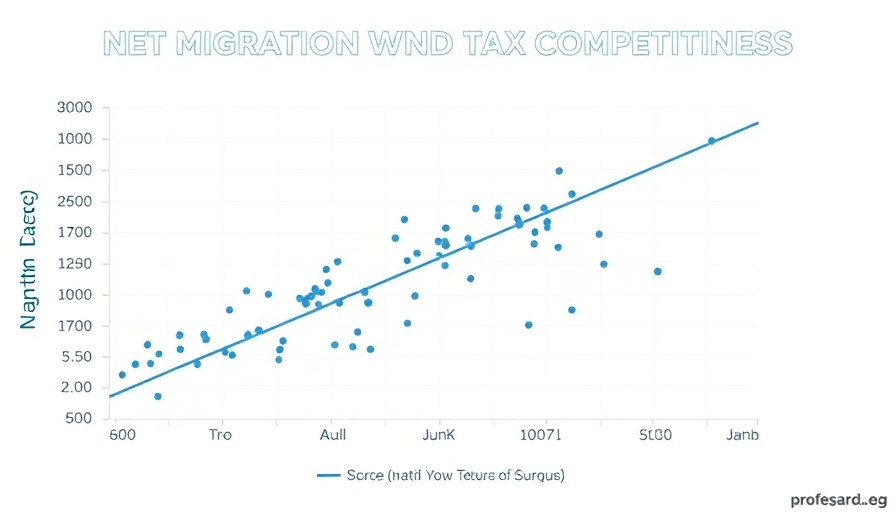
Scatter plot of net migration vs tax competitiveness.

Understanding the Tax Competitiveness-Migration Connection

New evidence suggests that states with well-structured tax systems attract more newcomers, according to the State Tax Competitiveness Index (STCI). This recent analysis uses data from the American Community Survey to illustrate a strong link between efficient tax codes and positive interstate migration patterns from 2021 to 2023. Notably, top STCI states like Florida, Texas, and Tennessee gained a significant number of new residents, while those at the bottom, including California, New York, and New Jersey, saw a mass exodus.

Future Predictions and Trends in Tax Policy

As states continue to rethink their tax structures post-pandemic, the trend of tax competitiveness influencing population movement is likely to persist. Policymakers are increasingly being advised to prioritize tax reforms to not only boost economic growth but also to retain and attract residents. This shift could signal a new wave of strategic tax modifications aiming to enhance statewide competitiveness.

Relevance to Current Economic Challenges

The correlation between tax policies and migration gains importance against the backdrop of current economic uncertainties. With individuals and businesses seeking destinations with lower tax burdens, understanding these dynamics becomes crucial. For many, the choice of where to live or operate a business is significantly influenced by tax considerations, prompting states to weigh their competitive tax positions carefully.

Industry Insights

0 Comments

Write A Comment

*
*
Please complete the captcha to submit your comment.
Related Posts All Posts
04.04.2026

Unlocking the Secrets of Payroll Processing Fees: A Guide for Business Owners

Update Understanding Payroll Processing Fees: A Business Essential Payroll processing fees are essential for businesses to deliver accurate employee payments and comply with labor laws. These fees generally cover crucial tasks such as wage calculations, tax withholdings, and compliance measures. However, they can also introduce unexpected costs, making it vital for business owners to grasp the components influencing these fees. According to industry standards, payroll services can range from $200 to $250 per employee each year, depending on the provider and chosen features. What Do Payroll Processing Fees Typically Cover? To effectively manage finances, it’s crucial to understand what payroll processing fees encompass. Standard services include the calculation of employee wages, handling of tax withholdings, and preparation of year-end tax forms like W-2s and 1099s. Additional costs can arise from features such as direct deposit, check printing, and specialized reporting. Often, payroll processing companies charge a base fee along with per-employee or per-pay period charges. Recognizing these fee structures allows for precise budgeting. Factors That Affect Payroll Processing Fees Several factors contribute to payroll processing fees, and understanding these can help businesses make informed financial decisions. The number of employees is a significant determinant; more employees often equate to higher costs, reflecting the complexity of payroll management. Additionally, the frequency of payroll cycles impacts overall expenses; weekly payrolls typically generate higher fees due to increased processing requirements. Finally, geographical variances in tax regulations can complicate payroll calculations and increase fees. Minimizing Payroll Processing Fees: Best Practices for Businesses To minimize payroll processing fees, businesses can adopt several strategies. Firstly, evaluating service providers is essential; some may offer bundle packages that provide comprehensive services at a reduced cost. It’s also advisable to choose payroll frequencies that align best with cash flow—biweekly payments may balance administrative load and cost efficiency. Further, implementing payroll software can streamline processes, reducing reliance on external services and ultimately lowering costs. Understanding the necessity of each payroll feature and making informed decisions will empower businesses to manage their finances more effectively.

04.03.2026

Transforming HR: Key Software Applications to Enhance Employee Satisfaction

Update Assessing the Future of Human Resources SoftwareIn the ever-evolving landscape of human resources (HR), the selection of software plays a critical role in shaping organizational efficiency and employee satisfaction. With multiple software applications available, understanding their distinct functions can enhance HR operations and foster a productive workplace environment.The Core Applications Shaping HR OperationsExploring essential HR software reveals a range of tools pivotal in streamlining crucial processes:Recruitment Software: Recruitment software automates job postings and applicant tracking—essentially transforming the hiring landscape. AI-driven screening tools, such as those offered by popular platforms like Greenhouse and Lever, help HR managers enhance recruitment efficiency, reduce time-to-hire, and focus on strategic decision-making.Onboarding Platforms: After hiring, onboarding platforms ease new employees into the culture and workflows of a business. These systems ensure that new hires receive timely notifications and introductions to relevant team members, thereby facilitating a smoother transition and increasing retention rates.Performance Management Systems: Performance management tools empower organizations to align employee goals with company objectives through structured evaluations, 360-degree feedback, and continuous communication. Leveraging these systems cultivates a culture of growth and accountability.Employee Engagement Tools: Such platforms enhance communication and recognition among employees, creating a sense of belonging and enhancing morale—key elements in reducing turnover and fostering loyalty.Benefits Administration Tools: A well-designed benefits administration solution seamlessly integrates with payroll systems to simplify benefits access for employees, improving satisfaction and engagement.Understanding Employee Engagement ToolsAs employee expectations evolve, so do the methods and tools to engage them. Tools like PeopleGoal and Culture Amp are at the forefront of this transformation, utilizing real-time analytics and feedback mechanisms to drive proactive engagement strategies.Trends in Human Resources SoftwareThe future of HR software is increasingly shaped by trends focusing on personalization and holistic employee engagement. Advanced analytics and AI capabilities are becoming the standard, enabling organizations to gain deeper insights into employee sentiment and predict engagement levels. Incorporating wellness features and gamification elements is also emerging as a strategy to enhance employee morale and foster a positive workplace culture.Making Informed DecisionsWhen selecting the right HR software, organizations should carefully evaluate their needs against the functionalities offered by various platforms. Key considerations should include:Integration capabilities with existing HR systems.User-friendliness of the interface and ease of adoption across teams.Customer support and training resources available post-implementation.The potential for scalability as the organization grows.Ultimately, the effective implementation of HR software can significantly boost organizational productivity and employee engagement. As businesses continue to adapt to changing work environments, embracing technology that values employee feedback and promotes a culture of recognition will be crucial for success.

04.02.2026

Unpacking the Impact of Trump's Tariffs: What It Means for Small Businesses

Update The Growing Impact of Trump's Tariffs on Small Businesses The arrival of Trump's tariffs on March 2, 2025, dubbed "Liberation Day," marked the beginning of a contentious chapter in U.S. trade policy. Designed to bolster American manufacturing, these tariffs have instead inflicted significant strain on small-business importers, who have seen their costs soar. On average, these businesses are now facing an increased tariff bill of $306,000, according to analysis from the Center for American Progress. Shifting Trade Dynamics: A Global Perspective In tandem with rising tariffs, trade relations have shifted dramatically, particularly with nations such as China. Following Trump's announcement, U.S. imports from China plummeted by approximately 30%. This shift indicates that American firms are becoming increasingly reliant on alternative markets like Vietnam and Mexico, as the U.S. seeks to disentangle itself from China. Cascading Effects: Higher Costs and Rising Prices The ramifications of these tariffs extend beyond international trade; they are affecting consumers directly. An estimated 55% of the newly implemented tariffs have been passed on to American shoppers, contributing substantially to rising inflation rates, which climbed by about half a percentage point last year. Future Predictions: What Lies Ahead While Trump's administration remains committed to its tariff strategy, the economic realities paint a different picture. Many economists suggest that even if tariffs were to be relaxed, the intricate web of trade relationships may never return to pre-war norms. The isolationist approach has not only affected importers but will likely continue to impact inflation and small business viability. Conclusion: The Broader Implications for Local Economies As we reflect on the first year of these tariffs, it's clear their effects are far-reaching. Small businesses, which represent a cornerstone of local economies, are struggling under the weight of rising costs and operational challenges. It remains to be seen how the situation will evolve, but ongoing dialogue about trade policies will be essential for paving a path forward that supports both American industry and its small business owners.

Terms of Service

Privacy Policy

Core Modal Title

Sorry, no results found

You Might Find These Articles Interesting

T
Please Check Your Email
We Will Be Following Up Shortly
*
*
*