
Add Row
Add Element
Kozi checks and balances
update

Kozi Checks & Balances
Media Site Home

cropper
update
Add Element
  • Categories
    • Kansas Tax Compliance
    • Audit-Proofing Strategies
    • Bookkeeping Basics
    • QuickBooks Optimization
    • Industry Insights
    • Tax Deduction Deep-Dives
    • Local Business Spotlights
    • Payroll Taxes
    • Business Directory
Add Row
Add Element
cropper
update
 Kozi Checks & Balances TaxTactics News 
cropper
update
July 04.2025
2 Minutes Read

Exploring the Economic Impact of the 'One Big Beautiful Bill Act'

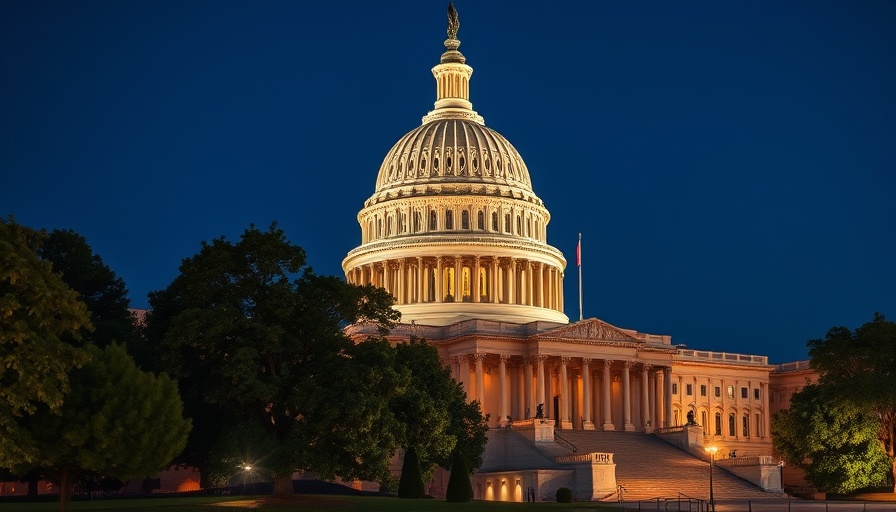
The U.S. Capitol Building symbolizing the One Big Beautiful Bill Act impact on economy, glowing at dusk.

The Impact of the "One Big Beautiful Bill Act" on the American Economy

The recent passage of the "One Big Beautiful Bill Act" marks a significant shift in U.S. tax policy and is expected to affect various aspects of the economy over the coming years. This legislation, which has garnered considerable attention, proposes a mixture of tax cuts and reform aimed primarily at stimulating growth while addressing the expiration of existing tax measures from the Tax Cuts and Jobs Act (TCJA).

Understanding the Key Provisions of the Bill

The "One Big Beautiful Bill" introduces several key provisions, including permanent adjustments to individual tax rates and brackets, which underscore a strategic shift toward a more stable tax code. By making these changes permanent, proponents argue that the bill will enhance predictability for taxpayers and encourage greater investment in the economy.

Projected Economic Outcomes and Deficit Implications

According to analyses from multiple economic bodies, including the Joint Committee on Taxation, the anticipated impact on long-run Gross Domestic Product (GDP) is a notable increase of 1.2 percent. However, the trade-off includes a projected reduction in federal revenue by $5 trillion from 2025 to 2034. To compound matters, increased government spending is anticipated, leading to significant budget deficits approaching $3.8 trillion over the same period.

Long-Term Fiscal Health at Stake

The potentially long-lasting effects of the new bill might set off debates about fiscal responsibility. While increasing GDP is favorable, the associated rise in the federal debt-to-GDP ratio—from 117.1 to 126.7 percent—raises concerns about the sustainability of this growth. The nuances of the economic implications underline a complex balancing act for policymakers between stimulating growth and maintaining financial responsibility.

Why Public Awareness Matters

Comprehending the intricacies of tax policy not only affects individual finances but shapes the broader economic outlook of the nation. For businesses and taxpayers alike, understanding what this bill entails is crucial for navigating future financial decisions.

As the political discourse continues over tax reform, the insights gleaned from the "One Big Beautiful Bill Act" will continue to influence fiscal strategies and economic prospects. It's essential for readers to stay informed and engage in discussions that will shape the future of U.S. taxation.

Tax Deduction Deep-Dives

Write A Comment

*
*
Related Posts All Posts
12.12.2025

Navigating the Controversial QSBS Exclusion: Investment Strategies for Startups

Update Understanding the Qualified Small Business Stock (QSBS) Exclusion In the evolving landscape of U.S. tax law, the Qualified Small Business Stock (QSBS) exclusion has emerged as both a boon and a burden. Under Section 1202 of the Internal Revenue Code, this provision theoretically allows investors to exclude significant portions—up to 100%—of their capital gains when selling stock from qualified small businesses. Initially designed to stimulate investment in burgeoning startups, it inadvertently favors certain industries and complicates investment decisions. The Case Against QSBS: Why It’s Viewed as a Distorted Subsidy The QSBS exclusion has been critiqued for introducing distortive effects on market decisions. By primarily benefiting those who can afford specialized legal advice, it skews investment toward particular structures and expansions that may not reflect genuine business fundamentals. For instance, provisions set out in the One Big Beautiful Bill Act (OBBBA) exacerbate these distortions with increased limits and eligibility criteria, leading to greater complexity while making it harder for average investors to engage effectively. Alternatives to QSBS for Encouraging Investment Many economists argue that simplifying tax codes to promote expensing of short-lived assets would better serve growth. A streamlined approach not only reduces complexity but ensures that investment decisions are based on business needs rather than tax incentives. OBBBA's other provisions, which improve capital investment treatment, take steps in this direction but still fall short of eliminating QSBS’s convoluted legacy. Future Predictions: What Lies Ahead for QSBS Regulations As we look forward, it's essential to monitor how the QSBS policies evolve and their long-term implications on investment behavior. With growing concerns about fairness and neutrality in tax codes, potential reforms may phase out or revise the QSBS exclusion to better reflect equitable economic practices. This could steer investments toward industries that truly need capital infusion rather than merely those that can navigate the complexities of the current system. Common Misconceptions About QSBS Amidst the complexities surrounding QSBS, several myths persist, particularly among new investors. One widespread belief is that all shares held in startup contexts qualify for the tax exclusion. However, this assumption can lead to unexpected tax liabilities for those unfamiliar with the intricate requirements governed by gross asset limits, duration of stock holding, and active business status. Your Next Steps: Navigating the QSBS Landscape For stakeholders in the startup ecosystem—founders, early employees, and even seasoned investors—familiarity with QSBS qualifications is vital. The potential for achieving significant tax savings by leveraging QSBS calls for strategic planning and awareness. For many, the best approach involves engaging experienced tax professionals who can aid in the nuances of the current tax environment, ensuring you can maximize your investment returns while adhering to evolving regulations.

12.11.2025

Exploring the OBBBA's Impact on Debt and Economic Recovery

Update The OBBBA's Impact on National Debt and Deficit The One Big Beautiful Bill Act (OBBBA) is generating significant discussions regarding its long-term implications for the U.S. economy. The Congressional Budget Office (CBO) recently projected that publicly held debt could reach an unprecedented 106% of GDP by 2029, with a further rise to 117% by 2034. However, the forecast indicates that if the OBBBA is implemented, the debt could be pushed even higher, to approximately 124% by 2034. This scenario raises concerns about the sustainability of U.S. fiscal policies and emphasizes the critical nature of addressing national debt. Tax Cuts Amid Rising Debt The OBBBA is marked as a significant tax reduction, cutting about $5 trillion, or 1.4% of GDP, over the next ten years. While this cut aims to stimulate economic growth, its effectiveness is questioned. The act's provisions to manage costs through spending reductions have not fully offset the increased deficits that may arise. As a result, despite anticipated GDP growth of about 1.2% from the act, the projected increase in deficits amounts to nearly $3.8 trillion, indicating a troubling fiscal trajectory. Economic Growth Versus Fiscal Responsibility It's estimated that the OBBBA will only partially mitigate the fiscal strain on the national budget due to rising interest payments on the expanding debt. The projected increase in revenue will hover around the historical average of 17.3%, but it falls just short of adequately addressing the deficit. As the CBO has illustrated in its forecasts, sustaining such high deficit levels for an extended period remains unprecedented and unsustainable. Broader Implications for Fiscal Policy Incorporating the effects of the Trump administration's tariffs, the OBBBA may alleviate some financial pressure, generating about $2.1 trillion in additional revenue. Yet, even with these contributions, a net deficit increase of approximately $1.4 trillion is projected over the decade. This compounding effect highlights the urgent need for a more comprehensive reform in fiscal policy, particularly in areas like healthcare and social security, where expenditures continue to drive up the deficit. A Call for Fiscal Responsibility Lawmakers face the critical challenge of balancing tax cuts with spending reforms to mitigate long-term debt and deficits. Historical data suggests a significant need for a bipartisan approach that emphasizes fiscal responsibility. Continued measures such as health care reforms, enhanced revenue streams, and stringent spending controls are vital in ensuring that the U.S. can navigate through its fiscal challenges effectively. In summary, while the OBBBA aims to infuse the economy with tax cuts and spur growth, it comes at a steep fiscal cost. It is imperative for policymakers to harmonize these benefits with a responsible approach to managing future debts and deficits to secure economic stability.

12.09.2025

Why Some States May Tax NCTI Despite Exemptions on GILTI

Update NCTI: The Unforeseen Tax Challenge for States The taxation landscape is shifting drastically as states begin to grapple with the implications of net CFC-tested income (NCTI), the successor to the global intangible low-taxed income (GILTI) tax. While several states like Iowa, Kansas, New Hampshire, and Tennessee previously opted out of GILTI, their decisions may not shield them from the complexities of NCTI. This conundrum arises primarily from the specific wording in their tax codes that exempt GILTI by name rather than through broader references in the Internal Revenue Code. A Patchwork of State Responses Across the nation, twelve additional states (Arizona, Arkansas, Connecticut, Delaware, Kentucky, Louisiana, Massachusetts, Missouri, New Jersey, Oklahoma, Pennsylvania, and the District of Columbia) have taken measures to exclude GILTI from their state tax codes. However, these measures may not automatically extend to NCTI. Arizona, in particular, stands at a crossroads, where its determination regarding NCTI remains uncertain. This discrepancy introduces a degree of unpredictability for corporations operating in these regions, potentially exposing them to taxation on international income that they would have previously considered exempt. State vs. Federal Taxation: A Growing Disconnect At the federal level, NCTI serves as a minimum tax designed to complement existing income taxation on international earnings. However, states do not provide foreign tax credits, a crucial element in the federal system meant to alleviate some of the tax burden on businesses with foreign subsidiaries. Consequently, states that choose to conform to NCTI effectively levy a tax on a portion of income generated abroad, regardless of whether those income streams are subject to significant foreign taxation. This disconnect amplifies double taxation concerns, putting states that adopt NCTI at a competitive disadvantage. Why Decoupling from NCTI is Urgent Decoupling from NCTI is not merely a technical tax decision but a necessary policy stance that can safeguard local economies. The urgency is particularly high for states—like Iowa and New Hampshire—that previously enacted measures to exempt certain international income from taxation. If state lawmakers do not act swiftly, businesses may face unfavorable tax liabilities. Compounding the issue further, the taxation of NCTI does not reflect the economic realities of foreign operations and could lead to companies restructuring their operations and investments to minimize their tax exposure in these high-tax states. Looking Forward: Action Steps for Lawmakers As we move toward 2026 and the full implementation of NCTI, there is a critical need for state legislators to address these discrepancies in their tax codes. The introduction of clear guidelines and a commitment to decoupling from NCTI can help states maintain their economic attractiveness. Moreover, definitive legislative action can provide clarity to taxpayers and ensure a fair taxation system that does not penalize businesses engaged in legitimate international operations. In conclusion, the evolving nature of state tax codes concerning NCTI presents a unique challenge that demands prompt attention from policymakers. Failure to act may not only jeopardize state revenue but could also hinder competitiveness and deter economic growth. Stakeholders are encouraged to engage with local policymakers to advocate for tax decisions that support business innovation and economic resilience.

Terms of Service

Privacy Policy

Core Modal Title

Sorry, no results found

You Might Find These Articles Interesting

T
Please Check Your Email
We Will Be Following Up Shortly
*
*
*